
How to Build a Sustainable Virtual Assistant Business

-
How to Build a Sustainable Virtual Assistant Business
- What Are the Benefits of Large Virtual Assistant Clients?
- What Are the Downsides of Relying on Large Virtual Assistant Clients?
- Why Virtual Assistant Marketing Matters Even When You're Fully Booked
- Why I Prefer Several Smaller Virtual Assistant Clients
- What Are the Downsides of Having Smaller Virtual Assistant Clients?
- What Is the Ideal Client Mix for a Virtual Assistant Business?
- How Do You Manage Multiple Clients in a Virtual Assistant Business?
- Why Every Virtual Assistant Business Needs an Emergency Fund
- Lessons I've Learned About Running a Virtual Assistant Business
- Final Thoughts on Building a Sustainable Virtual Assistant Business
- FAQs
How to Build a Sustainable Virtual Assistant Business
One of the biggest lessons I've learned from running my Virtual Assistant business is never to rely too heavily on one client.
I made the mistake of allowing one of my biggest clients to make up a significant part of my business. We'd worked together for years and the workload had grown steadily over time. They'd become an important client and I assumed the work would continue. Then everything changed.
The client's business evolved, the work slowed down and eventually it stopped altogether. Suddenly, I had a large gap in my workload that couldn't be replaced with a few LinkedIn posts or a couple of networking conversations. Replacing Virtual Assistant clients isn't something you can do overnight and rebuilding your workload takes time.
Looking back, I don't blame either of us. Businesses, budgets and priorities change. Sometimes companies build internal teams and more recently, AI has reduced the need for some types of outsourced work. None of that was personal. It's part of running a Virtual Assistant business, although it took me a long time to realise that. That experience completely changed how I approach building a sustainable business.
I've been a Freelance Virtual Assistant working from home for many years and I've experienced both ends of the spectrum. I started with several smaller clients and as my business grew, some of those clients gradually became much larger. There were advantages to having fewer, bigger clients. I had fewer people to manage, stronger client relationships and a more predictable income, but I also learned that no client stays the same forever.
If I were starting my business again today, I wouldn't want most of my business relying on one or two large clients, no matter how brilliant they were. Instead, I'd build a business with several smaller clients, spreading my income across multiple businesses and reducing the risk.
What Are the Benefits of Large Virtual Assistant Clients?
There are advantages to having a few large Virtual Assistant clients and I've enjoyed this stage of my business. The biggest benefit is that you're serving fewer people, which means fewer emails, fewer meetings and less day-to-day noise. Instead of constantly switching between different clients and tasks, you can spend longer periods focusing on one business and doing deeper work.
You also build much stronger client relationships because you're working together regularly. You get to know their business inside out, understand how they work, what they need and how they like things done. Over time, you often become their right-hand person, working closely with the business owner and feeling like part of their team rather than an external supplier.
Large clients can also provide a more predictable Virtual Assistant income. When you know roughly how many hours you'll be working each month, it's much easier to plan your workload and manage your finances.
What Are the Downsides of Relying on Large Virtual Assistant Clients?
The biggest downside is that large clients rarely stay the same forever. I wish they did, but businesses constantly change. Budgets are reduced, priorities shift, teams grow, AI changes the way work is done, or the business moves in a different direction. It doesn't mean you've done anything wrong. It's just part of running a Virtual Assistant business.
The problem is that when your biggest client leaves, they don't take a few hours of work with them. They can leave a huge gap in your income that often takes months to replace. That's why I now believe it's much safer to spread your income across several clients rather than relying too heavily on one business.
Why Virtual Assistant Marketing Matters Even When You're Fully Booked
The other lesson I learned was never to stop marketing. When work is flowing, it's easy to become comfortable. You stop posting on LinkedIn and stop looking for opportunities because you're busy serving your existing clients. It gives you a false sense of security. Then one day your biggest client leaves and you suddenly realise you're having to rebuild your Virtual Assistant business from scratch.
To keep things manageable when I'm fully booked, I keep my marketing simple. Once a month, I share a round-up of what I've been working on over on LinkedIn. On Instagram, I post something a little more personal with a few photos from my month. I also share my latest blog posts on my LinkedIn Company Page and X. It doesn't take too long, but it keeps my business visible online and makes it much easier to build momentum again if I need more work in the future.
If there's one piece of advice I'd give to any freelance Virtual Assistant, it's this, don't wait until your diary is empty before you start talking about your business again. Consistent marketing goes a long way and makes replacing a client less stressful when the time comes.
Why I Prefer Several Smaller Virtual Assistant Clients
These days, I prefer having several smaller to medium-sized clients rather than relying on one or two large ones. The biggest advantage is that my Virtual Assistant income comes from several different businesses instead of just one. If one client leaves or their workload slows down, it's disappointing, but it doesn't have the same financial impact as losing a client who provides half of your income.
I also enjoy the variety of work. One day I might be working on bookkeeping, another day writing newsletters, creating social media content or designing a PowerPoint presentation. Every client is different, which keeps the work interesting, strengthens my skills and makes running my Virtual Assistant business enjoyable.
What Are the Downsides of Having Smaller Virtual Assistant Clients?
Having more clients creates different challenges. There are more emails, more deadlines, more meetings and more systems to log into. Every client has their own way of working, communication style and priorities. It takes time to learn how each business operates and build strong client relationships.
The biggest challenge for me is context switching. Moving from bookkeeping to social media and finally writing a newsletter requires your brain to constantly change focus. If you're not organised, it can quickly become overwhelming.
What Is the Ideal Client Mix for a Virtual Assistant Business?
If I were starting my Virtual Assistant business again, I don't think I'd aim for dozens of tiny clients or just one huge client. I think the sweet spot is having a few medium-sized clients that provide a solid foundation for your income, alongside several smaller clients while leaving space for ad hoc projects. That way you have financial stability without becoming too dependent on any one business.
After many years in business, I've learned that spreading your income across several clients helps reduce the stress when things change.
How Do You Manage Multiple Clients in a Virtual Assistant Business?
Managing multiple Virtual Assistant clients takes organisation, but I've developed a few systems that make it much easier.
When I'm taking on new work, I try to onboard one new client at a time. Learning a client's systems, processes and preferred ways of working takes mental energy, so bringing on too many clients at once can quickly become overwhelming.
I also group similar tasks together wherever possible. This reduces context switching and helps me stay focused for longer. One of the biggest changes I made was introducing a minimum three working day turnaround on my booking form. This sets expectations from the beginning and prevents my days from being filled with last-minute urgent requests.
I don't try to remember everything either. Each month I use a simple spreadsheet to map out recurring work, such as month-end bookkeeping, newsletters and other regular tasks. Having everything written down reduces my cognitive load because I know exactly what needs doing and when.
To help me concentrate, I keep email notifications switched off and my phone is on silent while I'm working. Constant interruptions make it much harder to focus on Virtual Assistant work, so I check my emails once a task is complete and before I move on to my next task.
I also complete my most demanding paid work during the first four hours of my day, when my concentration is at its best. Another lesson I've learned is not to reply to every email immediately, especially with new clients. Responding instantly can create the expectation that you're always available. Instead, I focus on completing the work and replying to emails later in the day.
Finally, I try to be realistic about how many hours I can really work. It's easy to fill every spare hour with client work, but you also need time for administration, marketing and breaks. Your energy won't be the same every day, so building flexibility into your schedule makes your Virtual Assistant business much more sustainable in the long run.
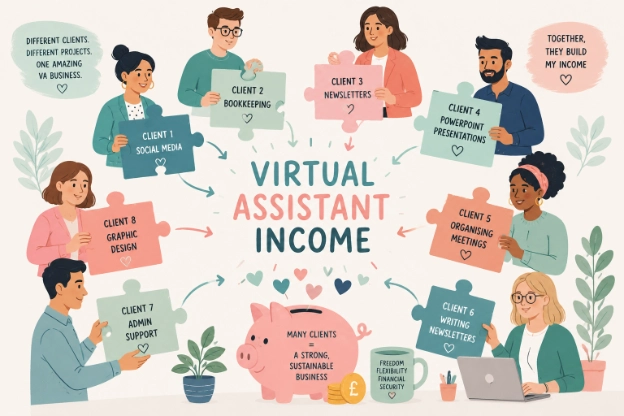
Image description: This illustration shows different Virtual Assistant clients using services such as social media, bookkeeping, newsletters, presentations and admin support, all contributing to a stronger, more stable Virtual Assistant income.
Why Every Virtual Assistant Business Needs an Emergency Fund
One of the best financial decisions I've made in my Virtual Assistant business has been building a healthy emergency fund.
An emergency fund is money you've set aside to cover unexpected expenses or a temporary loss of income, giving you time to recover without worrying about paying the bills.
Since starting my Virtual Assistant business, I've experienced two major periods where my workload dropped significantly. The first was during COVID and more recently, AI has changed the type of work some clients outsource. On both occasions, my income reduced as clients cut budgets or no longer needed certain tasks.
Having an emergency fund meant I didn't have to panic. I had time to assess the situation, update my services and start marketing again until I replaced the clients I'd lost.
One thing I've also learned is that I don't want to work at 100% capacity all the time.
Today, I have more Virtual Assistant clients who each pay me smaller amounts and I deliberately leave space in my diary. The first two weeks of each month are usually much busier with recurring client work such as bookkeeping and newsletters, while the second half of the month is often quieter.
That flexibility works well for me. It gives me room for one-off projects, such as PowerPoint presentations or other ad hoc work, without immediately feeling overwhelmed. It also gives me the breathing space to catch up on my own business administration, market my business or recharge after a busy period.
I've learned that having spare capacity isn't wasted time. It's one of the things that helps make my Virtual Assistant business more resilient, enjoyable and sustainable over the long term.
Lessons I've Learned About Running a Virtual Assistant Business
Looking back, losing a major client taught me more than I realised at the time. If I were starting my Virtual Assistant business again, these are the lessons I'd want someone to tell me:
Keep marketing going, even when you're fully booked. It's much easier to stay visible than it is to rebuild from scratch.
Spread your Virtual Assistant income across several clients so you're not relying too heavily on one income source.
Onboard new clients one at a time. Learning new systems and ways of working takes time and mental energy.
Set clear expectations from the start, such as your turnaround times and working hours. These should be included in your booking form and contracts. Read my blog: Why Virtual Assistant Contracts Matter for Your Business.
Create simple systems to manage recurring work instead of trying to remember everything.
Turn off unnecessary notifications and reduce interruptions so you can focus on deep work.
Work with your energy levels. I complete my most demanding work in the morning when I know I do my best thinking.
Be realistic about your capacity. Leave time for administration, Virtual Assistant marketing and proper breaks.
Build an emergency fund so you have breathing space if your workload suddenly changes.
Don't aim to be busy every minute of every day. Having spare capacity makes your Virtual Assistant business more sustainable.
Final Thoughts on Building a Sustainable Virtual Assistant Business
If you've recently lost a client, try not to see it as a sign that you've failed. Businesses change, budgets change and the way people work continues to evolve. Sometimes those changes have nothing to do with the quality of your work.
I've had to rebuild my client base more than once and although it wasn't easy, I came back stronger each time. Every experience taught me something new about running a more resilient Virtual Assistant business.
Today, I focus on having a healthy mix of clients, keeping my Virtual Assistant marketing ticking over and leaving enough flexibility in my diary for new opportunities. Building a sustainable Virtual Assistant business isn't about finding the perfect client who stays forever. It's about creating a business that can adapt when things inevitably change.
FAQs
Q. Is it better to have one large client or several smaller clients?
There isn't a single right answer. I think it's better to have a mix of medium-sized and smaller clients rather than relying on one large client. Spreading your Virtual Assistant income across several businesses helps reduce the risk if one client leaves.
Q. How can I build a sustainable Virtual Assistant business?
A sustainable Virtual Assistant business comes from spreading your income across several clients, setting clear boundaries, managing your workload carefully and continuing to market your business throughout the year. It also helps to leave a little flexibility in your diary for new opportunities and unexpected changes.
Q. Should I keep marketing my Virtual Assistant business when I'm fully booked?
Yes. One of the biggest mistakes I made was stopping my marketing when work was busy. Consistent Virtual Assistant marketing helps you stay visible, making it much easier to find new clients if your workload suddenly changes.
Q. Why do Virtual Assistant clients leave?
Clients leave for many reasons and it isn't always because of the quality of your work. Budgets change, businesses grow, priorities shift and some tasks are now completed using AI. That's why I believe every Virtual Assistant business should avoid relying too heavily on one client.
Q. Why is an emergency fund important for a Virtual Assistant?
An emergency fund gives you breathing space if your Virtual Assistant income drops. Instead of worrying about paying the bills, you can focus on marketing your services, finding the right Virtual Assistant clients and rebuilding your business.
You might also like:
Why Working From Home Feels So Exhausting
11 Daily Habits to Improve Life and Feel Better Working from Home
Why Virtual Assistant Contracts Matter for Your Business
-
How to Build a Sustainable Virtual Assistant Business
- What Are the Benefits of Large Virtual Assistant Clients?
- What Are the Downsides of Relying on Large Virtual Assistant Clients?
- Why Virtual Assistant Marketing Matters Even When You're Fully Booked
- Why I Prefer Several Smaller Virtual Assistant Clients
- What Are the Downsides of Having Smaller Virtual Assistant Clients?
- What Is the Ideal Client Mix for a Virtual Assistant Business?
- How Do You Manage Multiple Clients in a Virtual Assistant Business?
- Why Every Virtual Assistant Business Needs an Emergency Fund
- Lessons I've Learned About Running a Virtual Assistant Business
- Final Thoughts on Building a Sustainable Virtual Assistant Business
- FAQs